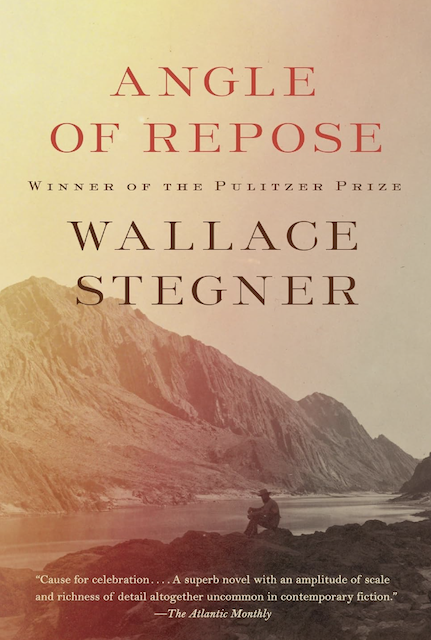
Angle of Repose is a slow going, complex novel that won the Pulitzer Prize in 1972. The novel follows Susan Burlington Ward, a commercial artist illustrating Longfellow, Alcott, and Walt Whitman etc, as she migrates to the far west after marrying the engineer Oliver Ward.
Susan was of gentile upbringing, so the west was rather a surprise to her. They lived in mining camps, in a log cabin in a canyon in Idaho, and in Mexico, following her husband’s checkered career. She worked as an illustrator the whole time, also writing articles and books about her experiences. She had children too, and wrote copious letters back east to her best friend there. Those letters give the book its structure.
The narrator of the book is her grandson in present day, as he sorts through her papers to cobble the story together. He is a recent amputee, a former history professor; this project gives his life meaning and teaches him some lessons as well. He takes on a hippie research student, a drop out of Berkeley, and they have some interesting conversations, as the story ekes out.
I choose to call this book “immersive,” although I can see some might think it was “plodding.” I read it concurrently with lighter fare, so it never dragged me down. It is the kind of book to be read in bigger chunks when you can.
The author drew the characters with exquisite detail, and you feel for them in their many setbacks. Four-fifths of the book takes place during Susan’s 20’s and 30’s. The last fifth zooms you up until her passing in her 90’s.
At 672 pages, this is long. Many say it is one of the best novels ever written. I understand why they say that. Because it requires a heightened level of commitment to finish it, I would rate it four stars, not the five it probably deserves. However, if you are in the mood to settle in to read a classic, this one has much merit. I’m glad I took the time to read it.