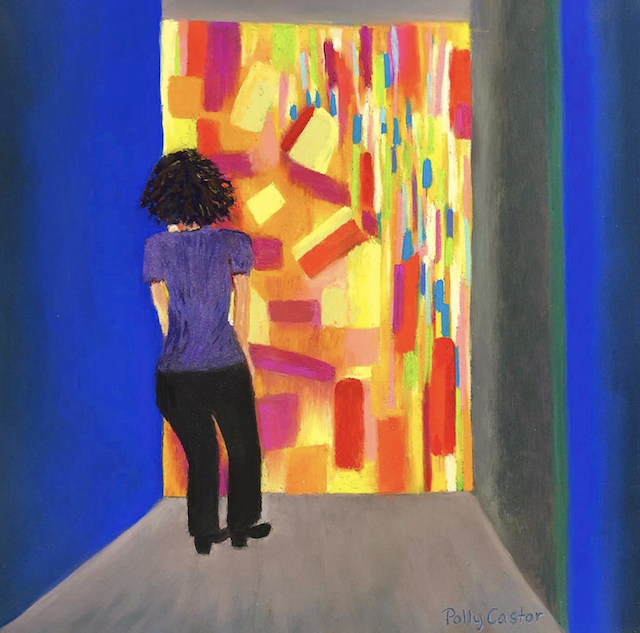
 At the Portal of the Afterlife (pastel) by Polly Castor
I have a couple of related questions for your blog feature where you answer reader questions.
My questions are about what happens after we pass away. What is your understanding of the following:
1) Do we see and meet people who have passed away before us (parents, friends, etc) I am having trouble wrapping my head around this. What about people like great grand parents, etc. I feel like if people are always progressing, maybe some of these people have “progressed” to a different or higher state of being.
2) What about people we might not want to see? What about someone who has had a bad relationship, maybe to an abuser. What about someone who was married more than once, what about both or all of their spouses?
3) What about someone who has had a substance addiction problem and maybe died as a result of that? What is their situation? We do not progress just because of passing on, but the physical part of the addiction is no longer there.
I am interested in your thoughts on these topics.
ooof! Don’t I have the best blog readers? Deeply thinking and caring people. I love it!
My first obvious thought is I don’t know any more than you do because I’ve never gone through it.
As a former atheist, I was fairly sure it was all over at the point of death. Since then, when my dad–an atheist –died, I’ve enjoyed thinking that he made some immediate progress after death, just by realizing it wasn’t all over: surprise! So maybe we do “progress just by passing on,” even though progress is not attained by death itself, but rather by a conscious union with God, which could be illumined directly by that translation, especially when continuance is unexpected.
I know of people who clinically died and saw someone who had passed on before they came back. I also have heard deathbed stories where the person that was dying was being greeted by loved ones at the portal as they passed through, and were talking about it in real time to their loved ones here as they passed.
I’m not in a position to doubt their stories, or the meaning of their stories, but I’ve also experienced some high fever delirium in which I thought I experienced all sorts of things that weren’t true, so I feel it is impossible to empirically know. I also know about the placebo effect, and some people so deeply desire and expect to see their loved ones, so maybe they do because of their belief?
It is however, a repeatedly popular stance, to believe we see loved ones. Even a favorite author of mine, Mary Baker Eddy, whom I respect on so many other issues says, “When we shall have passed the ordeal called death, or destroyed this last enemy, and shall have come upon the same plane of conscious existence with those gone before, then we shall be able to communicate with and to recognize them.” (Miscellaneous Writings page 42)
Maybe so, but I think the “same plane of conscious existence” phrase is what is critical. It would be without physical form as we know it, probably beyond a cleansing “probationary stage,” so I’m a bit dubious about those that act like our human characteristics will still define us and make us recognizable. I do buy, however, that spiritual clarity would be able to recognize spiritual clarity.
To me, the whole point of the resurrection (and its gift!) was to demonstrate the continuance of life after what we call death. Jesus did his healing work by looking beyond material appearances (even here on earth) to what God made and maintains spiritually. These two facts are the shoulders I stand on as I consider this topic.
How we are spiritually made (and maintained and continue) is as an enormous array of spiritual qualities and attributes–in “God’s image and likeness”– shared by all of us, with a unique combination and configuration of them for each of us. We do not lose this essential spiritual identity, for which I am grateful. If this is what is ultimately true and continuing about us, I think I would consciously recognize myself, but would I recognize loved ones without material resemblances and signifiers? Maybe from before birth? I think we leave our human body behind, so I’m not so sure how other people would be represented to us.
I know people who lay a lot of stock on seeing loved ones “on the other side.” It gives them vast comfort. I have to respect that, because again, we really don’t know. For me, I don’t lay any store at all there, and am willing to be surprised otherwise. I find comfort that my own immortality exists and in my one permanent relationship with unconditional divine Love. Thankfully, I do not think any more that I’ll cease to exist; I believe my soul moves on, and my loved ones’ souls do too, both before birth and after death, even while maybe beyond view.
I think it bears saying here that whether here or hereafter, our one actual forever relationship is with God. I feel we need to put our relationship focus there more than we do. I have a good marriage, but we always say we don’t go into heaven hand in hand. Similarly, God is our actual Father and Mother, and the actual Father and Mother of our children (thank goodness!). I believe we should focus on only seeking a relationship with God, now as well as later (and I’m not saying that is easy, so we should be practicing).
A story is told in Matthew and Mark in the Bible, where Jesus is asked about a woman who had seven husbands, and whose would she be wife to in the resurrection? Jesus responds that there is no marriage in the kingdom of heaven. We know in the kingdom of heaven, there is no sin, no disease, no tears, no marriage, no addiction, abuse, error or evil. In heaven, we only recognize the good, we are only good, and so is everyone else. To live with the mindset of Jesus is to know this is possible here as well as hereafter.
What is evil, erroneous, material, and mortal dies. Good doesn’t die. Spiritually we “never see death” (John 8:51) because we are unending good. No transition influences that. Death is not even a blip. Progress is a spiritual mandate, and goes on and on, both before and after death.
So for problematic stuff like you mention, it is important to consider a “probationary state” after death, where we continue to figure things out, releasing fear and fable, replacing it with love and truth. How long that takes is unknown and probably varies. Those in extreme physical pain before death likely still need to be healed afterwards. Those that tried to kill themselves, I believe will learn they didn’t end it at all, either to escape into oblivion or to get to a “better place.” We don’t know how long any individual’s false sense remains tethered to them after death, and what it will take to free them, but a purifying process inevitably must occur, if heaven is to be believed.
I might as well also mention that I see a lot of hell here on earth, manifested as erroneous mortal beliefs, suffering, greed, corruption, disease, and agony, but I believe those experiences are impermanent. I believe in a God who created good and would never allow someone to be unredeemable. So I think everyone makes it to heaven, either quickly or slowly, with cooperation or resistance, progressing before and/or after death.
And those you mention whom we “don’t want to see?” We may not recognize them once they are purified, or at least we may not mind them after that. When people say they “see” others after death, it always seems to refer to those who have cleansed their way past the probationary state. I have never once I heard of an– eek!– I don’t want to see that person afterlife story from those who have temporarily died.
I think we always have to face the music– to get or keep our soul shiny– which is why I’m such a huge fan of rectifying things here and now, and not later.
That purifying process is important and ongoing, both here or hereafter, until each one of us “arrives” cleansed, the way we were originally made in God’s image, with no baggage and zero obscuring overlay. The paramount relationship with God and individual identity as continuous and unavoidable, is to me is what matters.
Are you living the life now, where good is the only reality? How can you help others to do that as well? I believe that is the salvation of the world, and so desperately needed on this side of the grave, as well as beyond. I feel like there is plenty we must work on now, without worrying about later!
Does that help at all?
What do you think?
Let me know if you have questions for me, and I’m happy to respond.
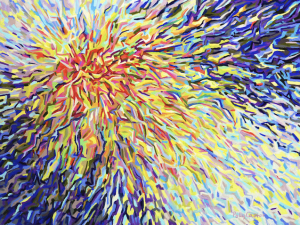
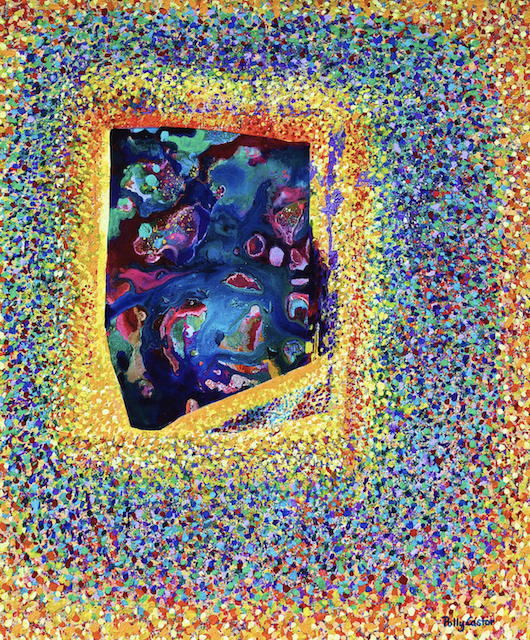 Passing On (acrylic) by Polly Castor
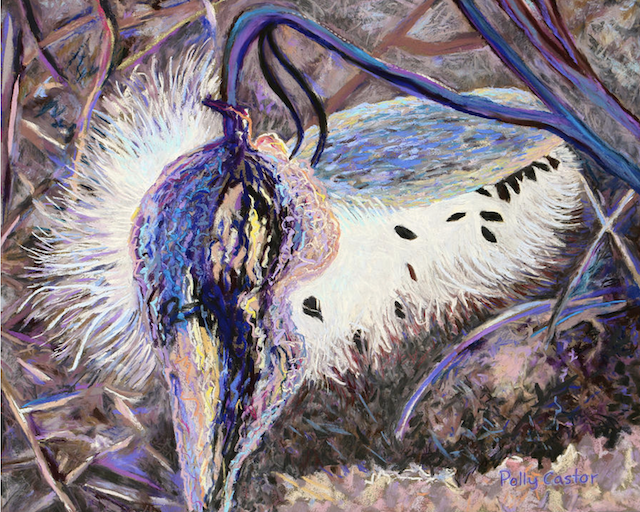 Life After Death (pastel) by Polly Castor
Related Articles


7 Comments
-
I think we need to admit that this is the biggest universal question answered by religious beliefs. In my 80th year, I think one’s belief should be comfortable. I was raised in a liberal Presbyterian church and the last 20 yrs attend the Episcopal CHURCH for the beauty, Zen-like experience, and uplifting spirituality.
For me, a loving God wouldn’t create Hell. I don’t believe in heaven; when you r dead, you have no consciousness. But I’d never say this to a friend who has lost a child.
I asked this question of a highly successful, intelligent, adult Sunday School class. Just like you! I was surprised at how many people do believe in heaven.-
Author
I would say I believe in heaven-supreme goodness- possible here or hereafter, but not so sure about “seeing loved ones” in anything that resembles human form after death.
-
-
Polly….thank you for your thoughtful response to these questions about what happens after we pass on. I appreciate that you are honest about what we can know and not know., and what we can deduce from basic premises. I had a very close friend who did not believe in God. We had a few discussions about religion over the years. She passed away unexpectedly, and I have wondered if she might have been thinking “OK, she was right”, I am still here!
-
I agree with you about whether there is an after life. I do feel we will see our family members who meant so much to us. But I believe that after a time of reflection and rest we will go to a group of souls whose progress is on our level. We will work on perfecting our souls, with the idea that we will advance to the next level or group. I also believe that each of us gets to come back to earth to experience a new life, with new challenges, because understanding the soul takes many, many lives. We have to become loving towards all humans, because that is how God loves all of us. I am a spark of the great Creator. so therefore I love.
-
I shared this post with my sister. She had some interesting thoughts about it which I will share:
I believe the teaching in Christian science that we have distinct individual identities (which opposes the eastern view of Nirvana, where we disappear into some larger thing). I have no problem believing that if we have distinct individual identities, then these will be recognizable to us later, even if in a form we do not comprehend now. Our ability to comprehend and describe things is very limited to our immediate experience.
If you had tried to describe “googling on your cell phone to get a webpage for an online store” to someone 200 years ago, that sentence definitely would’ve been quite beyond their immediate comprehension.
-
Wonderful example!!!
-
-
Thank you so much for answering these questions as thoroughly and honestly as you did! Very helpful and thought provoking. Your answers just made sense to me and confirmed my own beliefs thus far.




)